
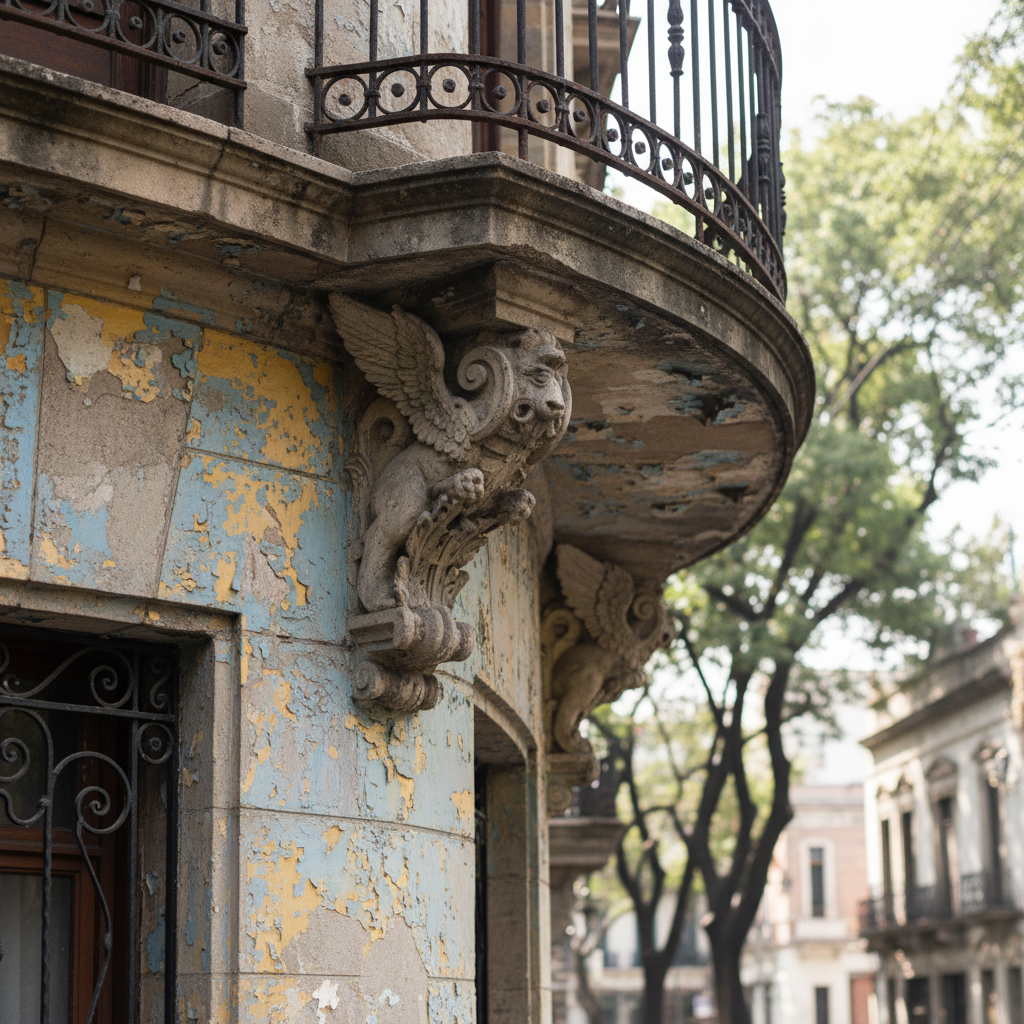
For many investors, seeing the words "Inmueble Catalogado" (Catalogued Property) on a listing sheet is a deal-breaker. They imagine bureaucratic nightmares, frozen designs, and endless red tape. However, in neighborhoods like Roma Norte and Juarez, the catalogued designation is not a liability—it is the primary driver of value. The key is understanding the rules of the game.
Renovating a heritage property in Mexico City requires navigating a dual system of regulation. It is not just about getting a building permit; it is about curating a piece of history.
1. The Two Guardians: INBA vs. SEDUVI
The first step is distinguishing between the two main bodies that govern heritage real estate in the capital.
INBA (Instituto Nacional de Bellas Artes)
Protecting Art: INBA oversees properties with "Artistic Value," typically built in the 19th and 20th centuries. This covers the vast majority of Roma Norte's Porfirian mansions, Art Nouveau townhouses, and Art Deco apartments. Their primary concern is the preservation of the aesthetic integrity—facades, original staircases, and distinct architectural features.
SEDUVI (Secretaría de Desarrollo Urbano y Vivienda)
Regulating Growth: SEDUVI manages urban planning, land use (Uso de Suelo), density, and height limits. Even if INBA approves your restoration, SEDUVI must approve your usage (e.g., converting a house into a restaurant).
2. What "Catalogued" Actually Means
Contrary to popular belief, a catalogued building is not a museum piece that must remain frozen in 1910. The goal of conservation is adaptive reuse—keeping the building alive and useful.
Protections generally fall into three levels:
- Integral Protection: The highest level. You must preserve both the exterior and the interior layout. Modifications are very restricted.
- Structural Protection: You must preserve the main structure and facade, but internal non-load-bearing walls can often be moved.
- Environmental Protection: Often applies to non-historic buildings within a historic zone. You can demolish and rebuild, but the new design must respect the scale and context of the neighborhood.
3. The Strategy: "Invisible Intervention"
At Talacha, our approach to heritage renovation is "Invisible Intervention." We aim to restore the facade to museum quality—using original lime plasters, restoring wood joinery, and replicating ironwork—while radically modernizing the core.
Structural Retrofitting
Many turn-of-the-century brick buildings in Roma are seismically vulnerable. We often insert rigid steel frames or concrete shear walls inside the existing masonry shell. This provides 2026 safety standards without altering the historic appearance.
The "Dialogue"
When adding a new element (like a rooftop addition), the Venice Charter dictates that it should not try to mimic the old style falsely. It should be distinctly modern—glass, steel, contemporary lines—creating a clear dialogue between the past and the present.
4. The Permitting Timeline
Patience is an asset class here. A standard renovation permit might take 3 months. A heritage permit involving INBA can take 6 to 12 months.
You will need a specific type of signatory engineer: a Corresponsable en Diseño Urbano y Arquitectónico (C/DUyA) who specializes in heritage. They act as the liaison between the project and the authorities.
5. Financial Incentives
The city offers carrots along with the sticks. Owners of restored catalogued properties can apply for:
- Predial Discount: Up to 100% exemption on property taxes for certain conservation projects.
- ISAI Exemption: Reductions in acquisition tax when buying to restore.
- Transfer of Development Rights: In some cases, the "unused" vertical potential of a protected building can be sold to a developer elsewhere (though this market is complex).
6. Why It's Worth It
Beyond the romance, the numbers back it up. Restored heritage properties in Roma Norte command the highest price per square meter in the city, outperforming new luxury builds in Santa Fe or Polanco. They are finite assets—they aren't building any more 1920s mansions.
Own a Piece of History?
Navigating INBA requirements requires a specialized architectural team. Talacha has a track record of successful heritage approvals and award-winning restorations.
Discuss Your Heritage ProjectFrequently Asked Questions
Can I demolish the interior?
It depends on the level of protection. For many properties, yes, as long as the facade and first "bay" (first 3-5 meters) are preserved.
Does INBA charge for the permit?
No, the technical review by INBA is free. However, the costs for the specialized architects and DROs to prepare the submission are higher than standard projects.