
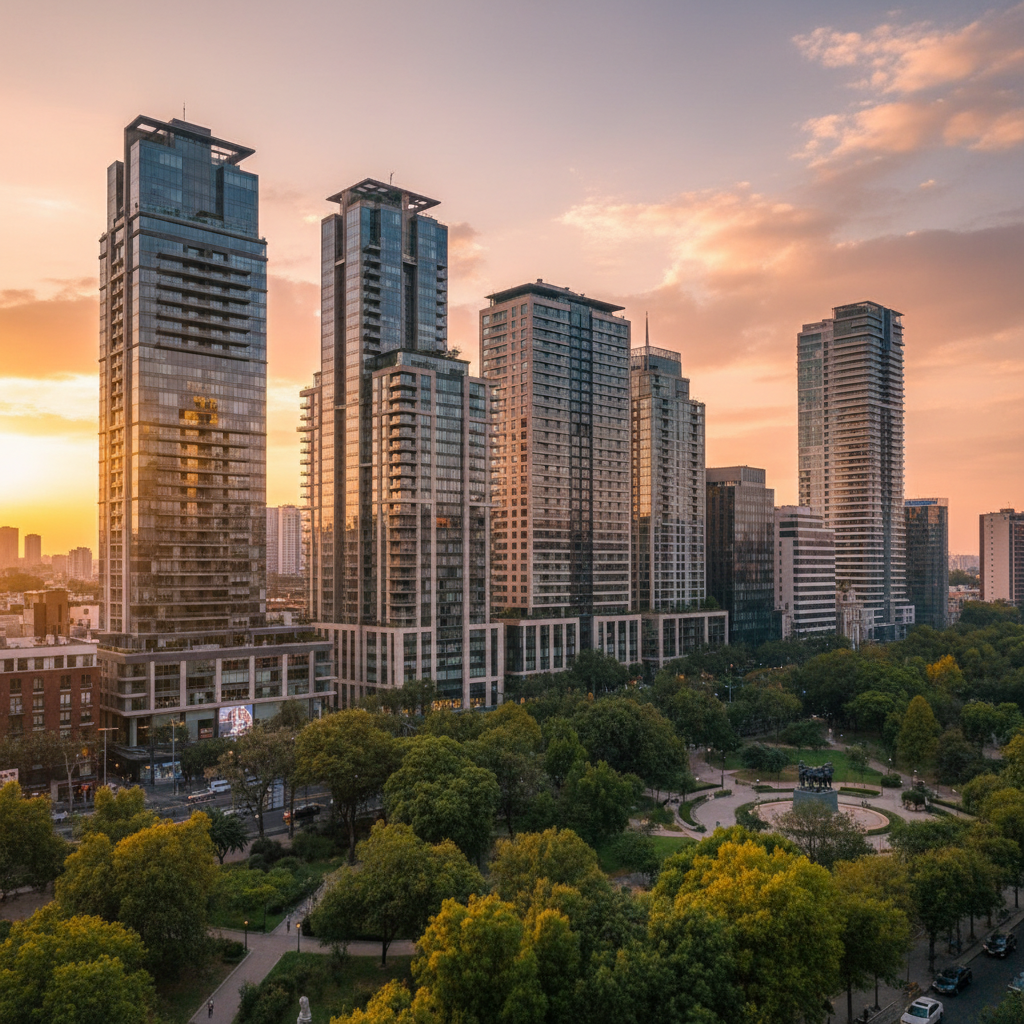
Mexico City has rapidly evolved into a primary destination for international investors and expatriates seeking both lifestyle upgrades and robust real estate appreciation. However, a persistent myth continues to cloud the market: the idea that foreigners cannot legally own land in Mexico. This is categorically false. While restrictions exist on the coastlines, the rules in the capital are distinct and favorable to international buyers.
In this 2026 guide, we dismantle the complexities of the Mexican property market, explaining the specific legal pathways for foreigners to acquire real estate in Mexico City (CDMX), the costs involved, and the strategic advantages of buying in the capital versus coastal resort towns.
1. Direct Ownership vs. The Restricted Zone
The most critical legal distinction for foreign buyers in Mexico is the geography of the property. The Mexican Constitution defines the "Restricted Zone" as any land within 100 kilometers of a border or 50 kilometers of the coastline.
The Coastal Trap: The Fideicomiso
If you purchase property in Tulum, Puerto Vallarta, or Los Cabos, you are in the Restricted Zone. As a foreigner, you cannot hold the title directly. Instead, you must use a Fideicomiso (Bank Trust). In this arrangement, a Mexican bank holds the legal title, while you are the beneficiary with full rights to sell, rent, or bequeath the property. While secure, this adds setup fees ($2,000 USD+) and annual maintenance fees ($500–$1,000 USD) to your ownership costs.
The Mexico City Advantage: Direct Deed (Escritura)
Mexico City is located well outside the Restricted Zone. This means foreigners can hold direct fee-simple title to property here, exactly the same as a Mexican citizen. You do not need a Fideicomiso. Your name will appear on the Escritura Pública (Public Deed), granting you absolute ownership without the need for a bank intermediary. This simplifies the process and significantly reduces long-term holding costs.
2. The SRE Permit and the Calvo Clause
While you don't need a bank trust, there is one bureaucratic requirement for foreigners buying in CDMX: the SRE Permit.
Before closing, your Notary Public (Notario Público) must apply for a permit from the Ministry of Foreign Affairs (Secretaría de Relaciones Exteriores or SRE). This permit grants you permission to purchase the specific property.
Understanding the "Cláusula Calvo"
This permit contains the famous "Calvo Clause." By signing it, you agree to consider yourself a Mexican national regarding your property rights and waive the right to invoke the protection of your home government in legal disputes related to the property. Essentially, you agree to play by Mexican rules. It is a standard formality found in almost all property transactions involving foreigners.
3. The Step-by-Step Buying Process in CDMX
The purchasing process in Mexico City differs from the US or Europe. It is heavily reliant on the Notario Público—a government-appointed official with far more power than a US notary.
Step 1: The Offer (Oferta de Compra)
Once you identify a property, you submit a written offer. If accepted, it is common to pay a small "good faith" deposit to take the property off the market while contracts are drafted.
Step 2: The Promissory Contract (Contrato de Promesa)
This is the most important document before the final deed. It outlines the price, penalties for default, and the timeline for closing. At this stage, you typically pay a down payment of 10% to 30% of the purchase price.
Step 3: Due Diligence and SRE Permit
Your Notario will conduct title searches to ensure the property is free of liens (gravámenes) and utility debts. They will also apply for your SRE permit. This process usually takes 30 to 60 days.
Step 4: Closing (La Escrituración)
You and the seller meet at the Notario's office. The remaining balance is paid (usually via wire transfer), taxes are withheld, and the final deed is signed. The Notario then records the deed with the Public Registry of Property.
4. Closing Costs: What to Budget
Buyers in Mexico City should budget significantly more for closing costs than in the US. Expect to pay between 4% and 7% of the purchase price in fees and taxes.
- ISAI (Acquisition Tax): This is the largest chunk, ranging from 3% to 5.5% depending on the property value in CDMX.
- Notary Fees: The Notario's honorarium is set by the state but can vary slightly.
- Registration Fees: Costs to record the deed in the Public Registry.
- Appraisal & Certificates: Mandatory commercial appraisal and "No Liens" certificates.
5. Best Neighborhoods for Foreign Investment
Mexico City is vast, but foreign investment is concentrated in zones with high heritage value, walkability, and safety.
Roma Norte & Condesa
The epicenter of the expat boom. These neighborhoods offer high rental yields and rapid appreciation. The architecture is a mix of Art Deco and Art Nouveau, making them ideal for renovation projects. Learn more about Roma Norte architecture.
Polanco
The "Beverly Hills" of Mexico. It offers the highest security and holds value exceptionally well, though entry prices are the highest in the city. Ideal for conservative, long-term capital preservation.
Juárez
The up-and-coming contender. Situated between Roma and the historic center, Juárez is currently undergoing massive regeneration. It offers a higher potential upside for investors willing to renovate early-20th-century mansions.
Coyoacán
For those seeking a quieter, more bohemian atmosphere south of the center. It feels like a separate village and attracts long-term residents rather than transient tourists.
6. Renovating: The Value-Add Strategy
Because new construction in prime zones is limited by heritage protections (INBA), the smartest investment strategy often involves buying an older, cataloged property and renovating it. This allows you to acquire prime land at a lower cost and force appreciation through design.
At Talacha, we specialize in navigating the complex permitting process for heritage buildings in Roma, Condesa, and Juarez. Renovating in CDMX requires a local team that understands seismic structural requirements and historic preservation laws.
7. Frequently Asked Questions
Can I get a mortgage in Mexico?
Yes, but interest rates are significantly higher than in the US (often 9% to 12%). most foreign buyers purchase in cash or use equity financing from their home country.
Do I need residency to buy property?
No. You can buy property as a tourist. However, obtaining temporary residency can offer tax advantages when you eventually sell the property (capital gains exemptions).
Is it safe to buy pre-construction?
It carries risk. Always vet the developer's track record and ensure they own the land outright. We recommend having a local architect review the construction quality before committing.
Thinking of Investing in CDMX?
Whether you're looking for a turn-key apartment in Polanco or a renovation project in Roma Norte, expert guidance is essential. Talacha combines international precision with deep local expertise.
Schedule a Consultation